The Saigoku Kannon Pilgrimage
The Saigoku Kannon Pilgrimage (Saikoku Sanjusansho junrei) covers 33 temples dedicated to Kannon in Western Japan and is the most famous of Japanese pilgrimages. Kannon (sometimes Kanzeon or Kwannon) is the Japanese name for the bodhisattva Avalokitasvara, or Bodhisattva of Compassion, one of whose 33 manifestations (the only female one) corresponds to the Chinese bodhisattva Kuan-yin, known in the West as the "Goddess of Mercy."
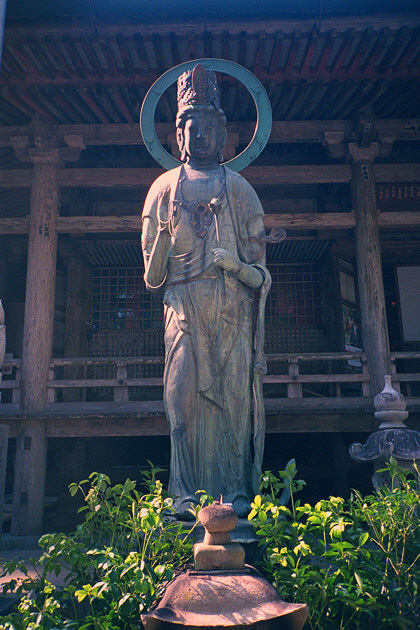
Kannon greets pilgrims in front of Seiganto Temple, the first stop on the Saigoku pilgrimage.
Kannon's ability to take 33 different forms is the reason why there are 33 temples on this 1500-mile pilgrimage that stretches from Lake Biwa to Kobe and touches Japan's east and west coasts.
The pilgrimage route dates from the 11th Century, but many of the temples were pilgrimages in their own right beforehand and some date back to the 7th Century. It's a "miracle pilgrimage," and each temple is associated with a miracle related to Kannon. At Kannonsho-ji, for instance, the temple is said to have been founded at the request of a merman.
For those who intend to do the pilgrimage, please read this personal account of the Saigoku circuit and check the list of temples below.
Temples
- Seiganto-ji (Seigantoji, Nachi-san)
- Kimii-dera (Kongoho-ji)
- Kokawa-dera
- Makinoo-dera (Sefukuji, Sefuku-ji)
- Fujii-dera (Gorinji, Gorin-ji)
- Tsubosaka-dera (Minamihokke-ji)
- Oka-dera (Okadera, Ryugaiji, Ryugai-ji)
- Hase-dera
- Nan'endo (Nanendo)
- Mimuroto-ji (Mimurotoji)
- Kami Daigo-ji (Kamidaigoji, Kamidaigo-ji)
- Iwama-dera (Shoho-ji)
- Ishiyama-dera
- Mii-dera (Miidera, Onjo-ji, Onjoji)
- Imakumano Kannon-ji (Kannonji)
- Kiyomizu-dera (Kyoto)
- Rokuharamitsu-ji (Rokuharamitsuji)
- Rokkakudo (Shiunzan Chohoji)
- Kodo (Gyoganji)
- Yoshimine-dera
- Anao-ji (Anaoji, Anaoo-ji, Bodai-ji, Bodaiji)
- Soji-ji (Sojiji)
- Katsuo-ji (Katsuoji)
- Nakayama-dera
- Kiyomizu-dera (Hyogo)
- Ichijo-ji (Ichijoji)
- Engyo-ji (Engyoji, Enkyo-ji, Enkyoji, Shosha-san)
- Nariai-ji
- Matsunoo-dera
- Hogon-ji (Hogonji, Chikubushima)
- Chomei-ji (Chomeiji)
- Kannonsho-ji (Kannonshoji)
- Kegon-ji (Tanigumi-dera)
By tradition, pilgrims visit the temples in order from 1 to 33, but they can also be reached in day-trips from Kyoto using public transport and averaging about two per day. Kyoto's Tourist Information Office can help with train and bus schedules for the more remote temples.
Before setting out on the pilgrimage you should buy a Saigoku pilgrims's book (nokyocho) - available at many, but not all, of the temples. In the Kyoto area, Ishiyama-dera has them. And be sure to go in the cherry-blossom or Autumn leaves season when the countryside is at its most colourful.
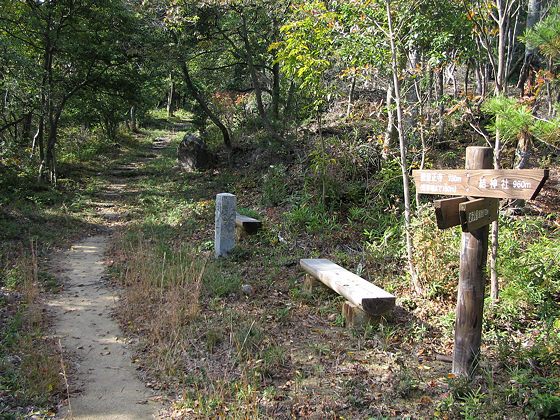
Signpost on the pilgrim's path to Kannonshoji Temple.
The basic procedure at each temple is to have your nokyocho inscribed and stamped at the nokyo (pilgrim's office), which will cost 300 yen. Then find the hall with the Kannon image, toss some money into the donation box, ring the bell (actually a kind of gong that you strike with a vertical rope) three times and say a prayer. You may also light three incense sticks or three candles, the number representing the Buddha, the Dharma and the Sangha.
Some of the more popular temples have a leaflet in English, but often there are no leaflets or signs in English and no one who speaks English. Be sure to take a guidebook such as Ed Readicker-Henderson's The Traveler's Guide to Japanese Pilgrimages.
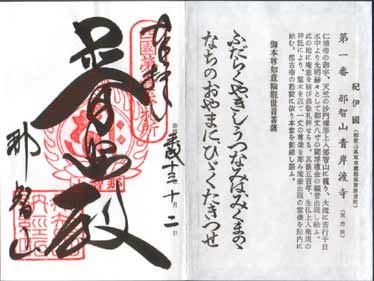
Nokyocho entry for the first temple of the Saigoku Kannon pilgrimage. On the left is the temple stamp, name and the date. On the right is a prayer and information about the temple.
Many of the Saigoku Pilgrimage temples charge an entrance fee, which contributes towards the upkeep of the temple, its gardens and its ancient sculptures. Some temples sell pilgrim's supplies and most sell omamori - amulets made of wood inside a cloth pouch. These cost from 500 yen to 1000 yen each.
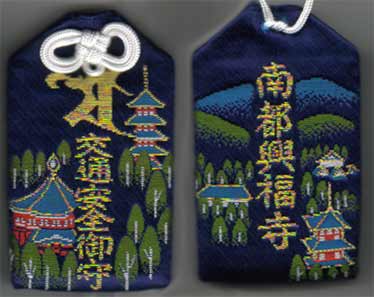
An omamori amulet shows Nanendo's octagonal hall and the five-tiered pagoda of Kofukuji Temple in Nara.
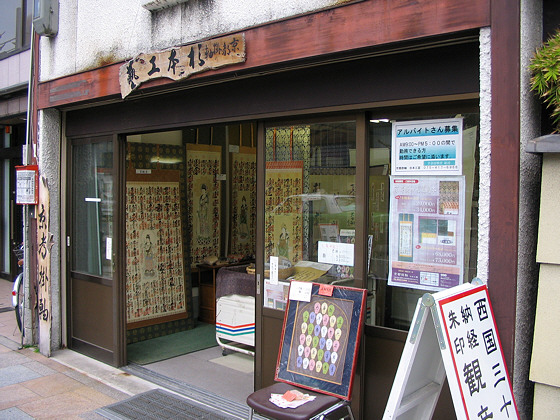
Shop making wall-hangings from pilgrim's books outside Kodoji Temple in Kyoto.
- The Traveler's Guide to Japanese Pilgrimages
by Ed Readicker-Henderson.
- Wandering with Basho: A Journey Around the Saigoku 33 Temples of Kannon Pilgrimage
by Craig McLachlan.
- Fighting Monks and Burning Mountains: Misadventures on a Buddhist Pilgrimage
by Paul Barach.
- Sacred Koyasan: A Pilgrimage to the Mountain Temple of Saint Kobo Daishi and the Great Sun Buddha
by Philip L. Nicholoff.
- The Way of the 88 Temples: Journeys on the Shikoku Pilgrimage
by Robert C. Sibley.


